
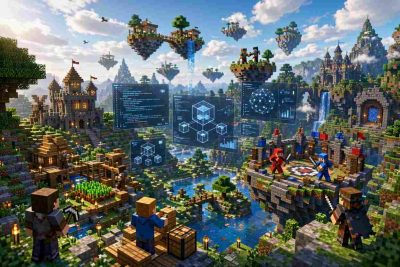
Minecraft has grown from a simple building game into a platform where millions of players explore, create, and connect. One of the biggest reasons for its lasting popularity is the wide variety of multiplayer servers available. These servers offer experiences that go beyond the original game, including competitive battles, survival challenges, creative building, and custom adventures.

Behind many of Minecraft’s top-rated servers is a team of developers who understand how to turn basic gameplay into something exciting. Video game development plays an important role in creating these experiences. From custom features to server performance, developers help build online worlds that keep players interested.

For anyone interested in Minecraft or video game development, understanding how successful servers work offers useful insights into game design, player engagement, and online communities.

How Video Game Development Makes Minecraft Servers Better

Minecraft servers are more than shared worlds where players can gather. Many operate like independent video games, complete with their own rules, progression systems, challenges, and rewards. Developers use programming tools, plugins, and custom content to create experiences that players cannot always find in standard Minecraft gameplay.

One of the most important aspects of server development is customization. Developers can introduce new game modes, special abilities, unique items, and interactive environments. A survival server might include custom enemies and quests, while a competitive server could feature ranking systems and special battle arenas.

These features help servers establish their own identity. Players often choose a server because it offers something different from other multiplayer communities.

Performance is another major consideration. Popular Minecraft servers may need to support hundreds or thousands of connected players across multiple game instances. Developers must manage resources carefully to reduce lag, prevent crashes, and maintain smooth gameplay. Server optimization, database management, and efficient programming all contribute to a better experience.

Security also plays an important role. Developers use moderation tools, anti-cheat systems, and access controls to protect their communities. These systems help create fairer environments where players can enjoy the game without unnecessary interruptions.

Successful servers also pay attention to user experience. Clear menus, simple navigation, helpful instructions, and balanced gameplay make it easier for new players to participate. A server with impressive features can still struggle if players find it confusing or frustrating.

The best development teams understand that technical performance and enjoyable gameplay must work together. A reliable server encourages players to return, while creative game design gives them reasons to stay.

Top-Rated Minecraft Servers Worth Exploring in 2026

Several Minecraft servers stand out because of their active communities, creative gameplay, and unique development approaches. Although rankings change, the following servers are frequently recognised among popular multiplayer choices.

Hypixel is one of the best-known Minecraft Java servers. It offers popular experiences such as Bed Wars, SkyBlock, and other competitive minigames. Its development approach demonstrates how custom game mechanics, progression systems, and regular content updates can turn Minecraft into a collection of different games. Players can connect using mc.hypixel.net.

CubeCraft Games provides multiplayer minigames for Java and Bedrock players. Its popular modes include EggWars, SkyWars, and Lucky Islands. CubeCraft shows how developers can create fast-paced competitions using Minecraft’s familiar building and combat mechanics. Its server address is play.cubecraft.net.

Wynncraft takes a different approach by transforming Minecraft into a fantasy role-playing game. Players can explore a large world, complete quests, develop their characters, and experience an ongoing adventure. It is an excellent example of how storytelling and custom programming can expand the possibilities of Minecraft. Players can join through play.wynncraft.com.

DonutSMP focuses on survival gameplay with competitive elements and an active player community. Its systems encourage resource gathering, trading, exploration, and player interaction. This server demonstrates how developers can make familiar survival mechanics more engaging through player-driven competition. Its address is donutsmp.net.

MCC Island offers competitive minigames inspired by Minecraft Championship events. Players can participate in challenges that test movement, teamwork, and combat skills. Its design highlights the importance of balanced competition and clear objectives. The Java server address is play.mccisland.net.

The Hive is a popular Bedrock server featuring accessible multiplayer games. Its activities include Treasure Wars, SkyWars, and other competitive experiences. The Hive demonstrates how developers can design games for players using different devices, including mobile phones and consoles. Bedrock players can find it through Minecraft’s featured server menu.

These servers are not necessarily ranked by review scores. They represent established choices with different gameplay strengths. Server activity, supported versions, and connection details may change over time.

What Aspiring Game Developers Can Learn From Minecraft Servers

Minecraft multiplayer communities provide a practical learning environment for anyone interested in video game development. Unlike building an entirely new game, creating a Minecraft server allows developers to work within an existing platform while experimenting with original ideas.

A useful starting point is understanding what players enjoy. Some prefer competitive games with clear winners, while others enjoy cooperative building or peaceful survival. Developers can study these preferences and design features that meet the expectations of their intended audience.

Game balance is another valuable lesson. Competitive servers must ensure that equipment, abilities, and rewards do not create unfair advantages. Survival servers need to manage resources and progression so that players remain challenged without becoming frustrated.

Developers can also learn about the importance of regular updates. Introducing new activities, fixing technical problems, and improving existing features can help maintain player interest. However, updates should improve the experience rather than introduce unnecessary complexity.

Community feedback is equally important. Players often identify problems that developers may overlook during testing. Listening to suggestions, reviewing complaints, and observing gameplay can reveal opportunities for improvement.

Minecraft development also introduces useful technical skills. Java Edition server creators commonly work with Java, server software, and plugin development tools. More advanced projects may involve databases, network management, and automated testing. These skills can support future work in software engineering and professional game development.

For beginners, creating a small survival server is often more manageable than developing a large multiplayer network. Starting with a simple concept allows developers to understand server configuration, permissions, performance, and player management before introducing more advanced features.

As experience grows, developers can experiment with custom minigames, original quests, and unique progression systems. Each project offers opportunities to improve both technical knowledge and creative problem-solving.

The success of Minecraft’s top-rated servers shows that memorable games depend on more than attractive environments or complicated features. They require reliable technology, thoughtful design, and an understanding of the people playing them.

Whether someone wants to explore popular multiplayer worlds or create their own server, Minecraft offers a valuable connection between entertainment and video game development. Its flexibility gives developers room to experiment, while its active communities provide opportunities to test ideas in real multiplayer environments.

Ultimately, the lessons learned from successful Minecraft servers apply to many areas of game development. Creating enjoyable experiences, maintaining stable systems, and responding to player needs are essential skills for building games that people want to play again.
Centralized Data Management for Game Development Teams

Video game development depends on accurate information at every stage, from early production and testing to publishing and post-launch updates. Studios manage extensive datasets covering character attributes, item inventories, digital assets, localization files, bug reports, and player feedback. When these records become disorganized, teams can face production delays, inconsistent content, and unnecessary rework.

Managing this information requires clear procedures and reliable administrative support. Some studios consider external assistance for repetitive record maintenance. When evaluating a data entry outsource arrangement, development studios should consider processing costs, quality control, confidentiality, and the technical knowledge required. Regardless of who handles the records, consistent data practices remain essential.

Why Data Management Matters in Game Production

Modern games contain interconnected systems that depend on accurate records. A single character may have associated animations, abilities, equipment, dialogue, and progression data. Changes to one component can affect several others.

Unity documentation explains that its asset management system uses unique identifiers and metadata to track imported files and their relationships. This illustrates why structured information matters when development projects become increasingly complex.

Eight common challenges can disrupt these workflows.

1. Inconsistent Game Asset Records

Artists, designers, and programmers frequently work with shared assets, including textures, character models, audio files, and animations. Incomplete descriptions or inconsistent naming conventions make these resources difficult to identify.

For example, similar file names may leave developers uncertain about which character model represents the approved version. Teams might accidentally use outdated resources or repeat completed work.

Epic Games documents asset validation features in Unreal Engine that support naming conventions and other project requirements. Studios can reduce confusion by establishing standardized file names, descriptions, categories, and approval statuses.

2. Duplicate and Outdated Database Entries

Game databases change throughout production. Without regular maintenance, duplicate character records, outdated item descriptions, and obsolete development notes can accumulate.

These entries create uncertainty about which information is correct. Developers may reference older specifications, while project managers might report progress using outdated records.

Studios should assign unique record identifiers, maintain revision histories, and archive superseded information. Regular duplicate checks also help preserve database accuracy.

3. Managing Large Volumes of Game Testing Data

Quality assurance teams generate substantial information through gameplay testing, bug reports, performance checks, and compatibility assessments. Organizing these findings becomes difficult when reports lack consistent details.

A useful bug report identifies the affected game version, reproduction steps, expected behavior, actual results, and supporting evidence.

Microsoft provides documentation for Xbox game playtesting, demonstrating the importance of structured testing workflows. Development studios can improve issue tracking by categorizing defects, assigning priorities, and connecting reports to specific builds.

4. Localization Data Errors

Multilingual releases require accurate translations of dialogue, menus, tutorials, item descriptions, and interface messages. Localization problems emerge when translation records lack context or use incompatible formatting.

Missing text identifiers, inconsistent terminology, and incorrect character encoding may produce confusing instructions or display problems.

The International Game Developers Association (IGDA) recommends organized resource files, clear contextual information, and consistent formatting in its game localization guidance.

Centralized terminology databases and language-specific testing can help studios identify errors before publication.

5. Poor Coordination Between Development Teams

Game production involves several specialized departments. Designers define gameplay systems, programmers implement functionality, artists produce assets, and testers identify technical issues.

When departments maintain separate records without reliable synchronization, information becomes fragmented. A gameplay adjustment approved by designers might never reach the testing team.

Consistent game asset sourcing and management can also improve coordination by helping teams work with shared creative resources, clear licensing information, and consistent asset references.

Shared project management systems can improve visibility. Teams should maintain current documentation, record important decisions, and assign responsibility for communicating changes.

Clear ownership matters as much as the software itself.

6. Manual Data Entry and Administrative Workloads

Development studios regularly update asset inventories, testing spreadsheets, content catalogs, and production records. These repetitive tasks require attention but may consume time better spent on specialized development activities.

External administrative teams can handle structured assignments such as catalog updates, document classification, and approved record transfers.

However, outsourcing requires appropriate safeguards. Game design decisions, complex technical records, and sensitive player information should remain under qualified internal oversight.

Automated field validation, documented procedures, and sample-based quality checks can reduce manual errors while preserving accountability.

7. Maintaining Accurate Player Feedback Records

After release, studios receive feedback through support tickets, community discussions, reviews, and gameplay reports. Identifying recurring problems becomes difficult when information arrives through disconnected channels.

Multiple players might describe the same gameplay defect differently. Without consistent categories, support teams may create separate reports for an identical issue.

Useful feedback systems classify submissions by topic, severity, platform, and affected game version. Duplicate detection helps teams identify recurring complaints without inflating issue counts.

Access controls and data minimization are equally important when records contain personal information.

8. Scaling Data Operations During Game Updates

Post-launch development introduces additional data management demands. Patches, downloadable expansions, seasonal events, and balance adjustments can modify existing content while introducing new records.

Outdated documentation becomes especially problematic when teams maintain several supported game versions.

Studios need version-controlled records, clear release documentation, and repeatable update procedures. Automated checks can identify missing fields or incompatible asset references before deployment.

These practices become increasingly valuable as games receive ongoing content updates.

Practical Ways to Improve Game Data Management

Improving data accuracy does not always require replacing existing systems. Studios can begin with a few consistent practices:

  • Standardize naming conventions, record formats, and required fields.
  • Maintain centralized databases with appropriate access permissions.
  • Use automated validation to identify duplicates and incomplete entries.
  • Assign clear responsibility for reviewing and updating records.
  • Conduct periodic audits and maintain reliable version histories.

Epic Games explains that Unreal Engine supports automated asset validation, including checks within continuous integration workflows. Such procedures illustrate how studios can catch certain errors before they affect production.

Administrative automation should complement human review rather than replace specialized judgment.

Conclusion

Reliable data management supports every stage of video game development. Consistent records help artists, developers, testers, and project managers work with the same information while reducing avoidable mistakes.

As games become more complex and updates continue after launch, organized databases, clear responsibilities, and routine validation will remain important. Studios that maintain dependable information workflows are better positioned to coordinate production, address problems efficiently, and support long-term game maintenance.

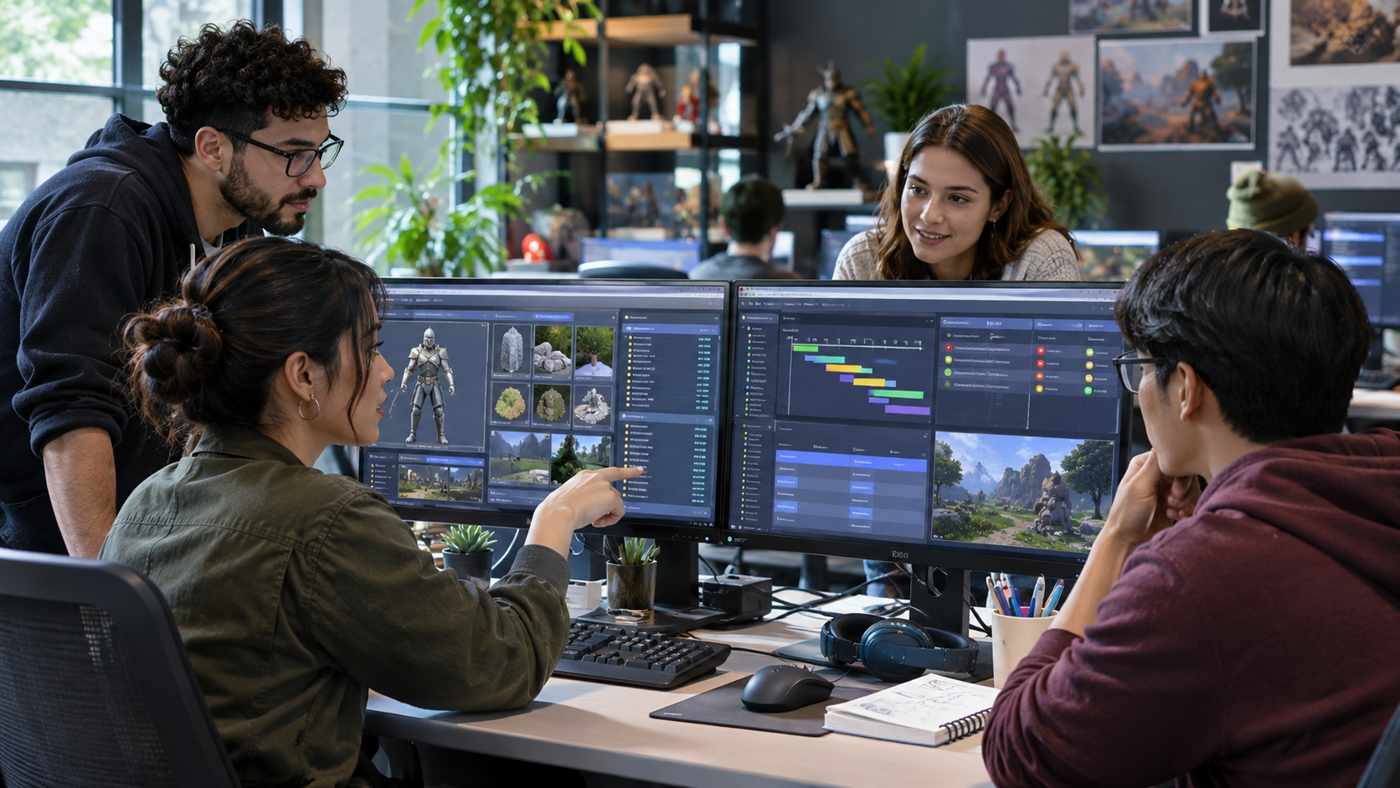
Two game developers collaborate in a bright studio with creative tools and blurred screens.

These days it is standard for defenders to create vivid and intriguing worlds, which they do on tight deadlines and as part of a team. Quality is crucial in these situations, which is why certain studios and independent creators make use of stock assets.

An official stock asset source makes it easy to obtain UI kits, sound effects, and a plethora of other elements to easily add to any.

Streamlined Foundation for Production

In development, it has always been the case that creativity has to partner with technical skill to create a coherent game, which often results in a lengthy and tedious process.

These assets bypass the lengthy process of creating elements from scratch, as they allow for faster construction of models and music. This saves developers a lot of time due to the ability to prototype the models.

This speed is crucial. In the early stages, studios that can perform quickly can identify problems much earlier and fix them, improve game mechanics, and omit entire redesigns that come later.

Developers can ignore menial backend work, like creating background graphics, idle animations, or interface buttons that are already perfected, and allocate crucial work hours to narrative and mechanics, because libraries filled with professional-grade assets are available.

Consistency and Quality Control

Some games stand out due to their stronger visual identities, while others remain unfinished. One of the integrated stock resources’ benefits is the built-in consistency.

Assets are usually sold in themed packs that are bundled together to ensure proper cohesion in art style, texture detail, and mood.

This is especially important in large, complex projects where several designers or departments are working on different parts, because it guarantees visual cohesion on the screen.

This level of standardization is especially important for studios working remotely or with international contractors.

Teams are able to centralize creative directions without confusion because they can share asset packs, set style references, and make the entire project uniform.


ALSO READ: Windows Licence Key Pitfalls When Studios Scale From Prototype to Launch


Safe Licensing and Long-Term Reliability

Copyrights can be a serious obstacle in the production of a game. If unverified assets are grabbed anywhere off the internet, a legal issue can occur, and engineering the game will require a lot more work.

Asset library systems offer clearly defined licenses, usage rights, and permissions to commercialize that shield copyright holders and publishers.

Knowing every texture, every audio track, and every animation is unencumbered from legitimate and secure sources allows studios to turn their focus to innovative engineering and ignore the administrative paperwork.

A Tool That Helps Both Indie and AAA Developers

Stock asset libraries can serve as a helpful point of reference and even a production tool. These, along with unending imaginations and technical skill, serve as a foundation for large-scale studio developers working on expansive open-world experiences or solo developers designing a pixel art platformer.

Stock library assets successfully bridge skill gaps, alleviate production bottlenecks, and enable polished and immersive games to be created with greater efficiency.

With proper, reliable, and easily reachable asset sources, all developers are able to gain the confidence and enable their imagination to create spectacular virtual realms.

Video game development has always been about creativity, storytelling, and technology. Over the years, tools have evolved to make game creation faster and more efficient. One of the newest tools making a difference is the AI rewriter. This smart tool can rewrite scripts, dialogues, and even in-game content to improve quality and speed up development.

Writing Smarter Dialogues with AI

Game scripts are not easy to write. Characters need to feel real, and the story must flow well. AI rewriters help by improving lines of dialogue quickly. Instead of rewriting lines over and over, a developer can input a rough draft and let the AI offer cleaner, sharper versions. This is helpful in games with a lot of conversation, like role-playing games or story-based adventures.

For example, if a character says, “I go now,” an AI rewriter might suggest, “I should get going,” or “Time to head out.” These simple changes can make dialogue sound more natural. Writers still have control, but they get better options faster.

Faster Editing for Game Content

Beyond dialogue, games also include item descriptions, mission briefings, and system messages. Editing all of this takes time. AI rewriters help by checking tone, fixing grammar, and suggesting more engaging language.

Let’s say a game includes a mission called “Find the Missing Key.” The original description might be: “Go to the cave and look for the key.” The AI could suggest: “Search the cave ruins to uncover the lost key.” It sounds more exciting and fits better with the theme of the game.

This small help saves hours of work for writers and allows developers to focus on gameplay and design.

Supporting Small Teams and Solo Developers

Not all games are made by big studios. Many are created by small teams or even solo developers. These creators may not have a dedicated writer or editor. That’s where an AI rewriter becomes a powerful ally.

Instead of hiring a full writing team, developers can use AI to clean up and polish their writing. It gives indie games a professional feel without the large budget. It’s also great for developers who speak English as a second language, as the AI helps fix awkward phrasing and unclear sentences.

AI rewriters don’t just fix mistakes—they elevate the writing to match the tone of the game.

Keeping Content Fresh in Live Games

Live service games like battle royales or MMOs need regular content updates. Players expect new events, quests, and messages. Keeping this content fresh is a challenge. AI rewriters help game studios keep up by quickly refreshing existing text or creating new versions.

Let’s say a game event has run before, and the team wants to bring it back. The AI can take the old messages and suggest fresh versions so returning players don’t feel like they’ve seen it all before. It saves time and keeps the experience engaging.

Balancing Creativity and Automation

Some people worry that AI might take over the creative side of game writing. But AI rewriters are tools, not replacements. Writers still make the big decisions. The AI just helps with speed and polishing.

Think of it like using a spellchecker or grammar tool. It doesn’t write for you—it helps you write better. In game development, this means faster updates, better dialogue, and smoother production timelines.

Game studios that use AI the right way keep the human touch while making smart use of technology.

At first glance, video game development and s4hana public cloud consulting might seem worlds apart. One focuses on building immersive experiences for entertainment, while the other delivers business software solutions. But both fields rely on complex systems, detailed planning, and strong user experiences to succeed.

The Connection Between Games and Public Cloud Consulting

Video games are built on sophisticated engines that manage large amounts of data, render visuals in real time, and allow players to interact smoothly. S/4HANA Public Cloud operates in a similar way—it processes massive data sets, connects multiple business functions, and gives users clear dashboards and interfaces.

Consultants working with S/4HANA Public Cloud face challenges such as:

  • Migrating data from legacy systems
  • Configuring modules for finance, sales, and supply chain
  • Delivering solutions on time and on budget
  • Ensuring that end users adopt the system

These are challenges game developers understand well. The gaming industry has developed methods for handling complexity and engaging users, and these same approaches can benefit cloud consulting.

Lessons from Video Game Development for S/4HANA Public Cloud Consulting

1. Agile Development and Iteration

Game developers rarely release a perfect product on the first try. They build prototypes, test them, and refine them through many iterations.

S/4HANA Public Cloud consultants can follow the same agile approach. By breaking projects into smaller phases, teams can:

  • Deliver value quickly
  • Get feedback from users early
  • Reduce the risk of major issues at go-live

This iterative style allows consultants to adjust based on real-world needs, rather than assumptions.

2. User Experience is a Priority

In gaming, the user experience (UX) is everything. If a game is frustrating or confusing, players will stop playing. The same is true for enterprise software.

Consultants can take inspiration from game developers by:

  • Designing clear, role-based interfaces using SAP Fiori
  • Reducing the number of clicks and screens users must navigate
  • Providing onboarding experiences that feel interactive and supportive

When employees enjoy using the system, adoption rates increase, and the organization gets more value from its investment.

3. Real-Time Feedback Loops

Video games give players immediate feedback. Points, levels, and progress bars show how they’re performing. S/4HANA Public Cloud consultants can adopt similar ideas through real-time dashboards and reports.

4. Strong Testing Practices

Game developers use extensive testing before launch, from automated tests to user testing sessions. Consultants can apply the same rigor during public cloud implementations.

  • Sandbox environments allow safe testing without impacting production
  • Automated validation tools can check data quality and system configurations
  • Pilot groups can test features and provide feedback before full rollout

Thorough testing reduces issues during go-live and builds confidence among end users.

How S/4HANA Public Cloud Consultants Can Apply These Lessons

Consultants who adopt strategies from video game development can transform their projects. Here are a few practical steps:

1. Use Visual Planning Tools

Game developers rely on storyboards and visual design documents. Consultants can use flowcharts and data maps to explain system architecture, migration plans, and module dependencies.

2. Involve Users Early

Just as game developers test with players, consultants should involve employees in the design and testing process. This helps identify usability issues before launch and gives users a sense of ownership.

3. Offer Gamified Training

Gamification is a proven technique from gaming. Consultants can design training programs with levels, rewards, and progress tracking to make learning the new system engaging.

4. Prioritize Continuous Improvement

A game does not end after release—developers issue patches and updates. S/4HANA Public Cloud consultants should also plan for ongoing optimization. Gathering feedback after go-live and making adjustments ensures the system evolves with business needs.

The Role of Public Cloud in Modern Enterprises

S/4HANA Public Cloud is designed for speed, flexibility, and scalability. Companies can access enterprise-grade ERP capabilities without managing hardware or large IT teams. By combining this with mobile apps, analytics, and AI-powered tools, organizations can run smarter and make better decisions. But to achieve these benefits, the implementation must be done correctly—and that’s where consulting expertise comes in.

Consultants who embrace innovative approaches inspired by video game development can deliver projects that are faster, more user-friendly, and more resilient.


Video games have experienced a significant transformation, thanks to technological advancements that have pushed the boundaries of realism and interactivity. However, these innovations are not limited to gaming alone. They have also influenced digital marketing strategies, including SMM Panel services provided by morethanpanel. An SMM Panel, a service that sells likes, follows, and engagement to social media accounts, benefits from cutting-edge developments in gaming by leveraging AI, data analytics, and immersive content creation to enhance user engagement.

With the increasing popularity of video games and the growth of online gaming communities, businesses are utilizing SMM Panel services to tap into these engaged audiences. Social media is a crucial platform for gamers, content creators, and brands looking to expand their reach. By integrating advanced gaming elements into social media strategies, such as gamified content, interactive storytelling, and AI-driven audience insights.

Enhanced Graphics and Realism

One of the most noticeable improvements in modern video games is the level of graphical detail. High-definition visuals, realistic physics, and cutting-edge animation make gaming experiences more immersive than ever before. With technologies like ray tracing and 4K resolution, games can now simulate real-world lighting, shadows, and textures, creating breathtaking environments. This realism enhances storytelling and engagement, allowing players to fully immerse themselves in digital worlds.

Improved Artificial Intelligence (AI)

Advancements in AI have significantly improved gameplay dynamics. Non-playable characters (NPCs) now exhibit realistic behaviors, adapting to player actions and making the game world feel more alive. AI-driven opponents can provide challenging, unpredictable gameplay, keeping players engaged for longer periods.

Additionally, AI is being used to generate game content, streamline development, and enhance procedural world-building, leading to more expansive and replayable experiences.

Virtual Reality (VR) and Augmented Reality (AR) Innovations

The introduction of VR and AR has revolutionized how players interact with games. VR headsets provide a fully immersive experience, allowing users to explore virtual environments in 360 degrees. Meanwhile, AR blends digital elements with the real world, enhancing games like Pokémon GO. These technologies are not just for entertainment; they are being used in training simulations, medical therapy, and educational programs, demonstrating their broader applications beyond gaming.

Expanded Multiplayer, Social Connectivity, and SMM Panel Influence

Online multiplayer gaming has brought people together from across the globe. Cloud gaming, cross-platform play, and seamless matchmaking have made it easier than ever for friends to connect and play together, regardless of their location.

photo editing with editing tools

The principles of video game development have transcended the gaming industry and are now integral to many modern tools, including photography editing software. Real-time rendering, procedural generation, and advanced lighting techniques initially designed for immersive gameplay are being repurposed to transform how photographers edit and enhance wedding photos.

One such application is the development of wedding photo editing tools, like wedding Lightroom presets, which streamline the editing process and provide photographers with consistent, professional-quality results. These presets, available at WeddingRebels, are a prime example of how video game technology influences creative industries, particularly in visual editing.

Real-Time Rendering and Its Impact

Real-time rendering is one of the most impactful contributions of video game development to photography tools. Originally designed to render lifelike graphics in video games instantly, this technique allows photography tools to display adjustments in real time.

For example, when photographers tweak brightness, contrast, or shadows, the software provides immediate visual feedback. This mirrors the functionality of game engines like Unreal or Unity, which render changes in lighting or textures instantly. This efficiency is especially valuable when editing large volumes of wedding photos, ensuring that photographers can quickly make fine adjustments while maintaining consistency across a set.

Dynamic Lighting Techniques

Lighting plays a crucial role in both gaming and photography. In video games, dynamic lighting creates mood and atmosphere, and the same applies to wedding photo editing. Techniques such as ray tracing, which simulates realistic light behavior, have been integrated into tools like Adobe Lightroom.

Wedding photographers benefit from these advancements by being able to manipulate highlights, shadows, and tones with greater precision. Tools inspired by gaming technology allow them to mimic natural lighting conditions or create artistic effects, enhancing the overall aesthetic of wedding albums.

Procedural Generation in Editing Tools

Procedural generation, a technique widely used in gaming to create expansive worlds and terrains, has also found its way into photography tools. While it might seem unrelated, the concept is highly adaptable.

Photography software can use procedural algorithms to auto-enhance images based on predefined parameters. For instance, when applying wedding Lightroom presets, the software adjusts exposure, color balance, and clarity based on preset data. This automation ensures consistency, saving photographers time while still allowing customization.

Bridging Creativity with Technology

The crossover between video game development and photography editing tools demonstrates how creativity and technology can work hand in hand. Video game developers design algorithms to optimize performance and create immersive visuals. Similarly, photography tools leverage these algorithms to enhance efficiency and quality.

For wedding photographers, this synergy is invaluable. Capturing a wedding involves thousands of images, and the editing process can be overwhelming. Tools enhanced by video game technology simplify this process, enabling professionals to focus on storytelling and emotional impact rather than manual adjustments.

The Future of Video Game Tech in Photography

The integration of video game techniques into photography tools is just beginning. As technologies like machine learning and AI evolve, the possibilities are expanding. Imagine software that learns a photographer’s editing style and applies it automatically, or tools that predict and correct potential flaws in images before they’re noticed.

For wedding photography, these advancements could lead to even more sophisticated presets and editing features. Tools might soon simulate the effects of weather, time of day, or even vintage film styles, pushing creative boundaries further.

READ ALSO: Using Microsoft Office Pro Plus 2019 in Video Game Development: An Essential Toolkit

Conclusion

Video game development techniques are shaping the future of photography. From real-time rendering to procedural generation, these innovations are elevating tools like wedding Lightroom presets to new heights. By blending advanced technology with creative possibilities, photographers are empowered to deliver stunning results with greater efficiency.

As gaming and photography continue to intersect, the results will undoubtedly inspire new ways to tell visual stories—whether in the world of gaming or the cherished memories of a wedding day.

used laptops

Video game development demands powerful computing resources. Whether you’re a seasoned developer or just starting, the tools you use can make a big difference. If you’re looking to dive into this field on a budget, refurbished laptops in Delhi might be a viable option.

Why Consider a Refurbished Laptop?

Refurbished laptops, especially those available in Delhi, offer a cost-effective way to access high-performance computing. These devices are often restored to a like-new condition and come with warranties. They provide an affordable alternative for game developers who need reliable hardware without the high price tag of new models.

Key Considerations for Game Development Laptops

When selecting a laptop for game development, here are a few important factors to consider:

Performance

  • Processor: A powerful CPU is essential. Look for at least an Intel i5 or AMD Ryzen 5. These processors handle complex computations and multitasking efficiently.
  • RAM: Aim for a minimum of 16GB. This ensures smooth performance when running development environments and tools.
  • Graphics: A dedicated GPU is crucial. NVIDIA GTX 1660 or higher can handle most game development tasks effectively.

Storage

  • SSD vs. HDD: Opt for an SSD. It speeds up data access and reduces load times, which is critical for handling large game files and development software.

Build Quality

  • Cooling System: Development work can put a strain on your laptop. Ensure it has a good cooling system to prevent overheating during long coding sessions.
  • Keyboard and Display: A comfortable keyboard and high-resolution display improve your overall workflow and reduce eye strain.

The Benefits of Choosing a Used Laptop

Choosing a used laptop for game development can be a smart move for several reasons:

  • Cost Savings: Save money while still getting a machine with powerful specs.
  • Environmental Impact: Purchasing used items is an eco-friendly choice. It reduces electronic waste and promotes recycling.
  • Immediate Availability: Often, refurbished laptops are available for immediate purchase, so you can start your development work sooner.

Tips for Buying a Used Laptop

Here are some tips to ensure you get a good deal:

  • Check the Specifications: Ensure the laptop meets the performance criteria for game development.
  • Review the Warranty: A warranty provides peace of mind in case of defects or issues.
  • Inspect for Physical Damage: Check for any signs of wear and tear that could affect performance.

READ ALSO: Optimizing Windows 10 Home Settings for Smooth Game Development

Conclusion

Video game development requires reliable and powerful equipment. Opting for a used laptop for sale in Bangalore or refurbished laptops in Delhi can be a practical solution to balance performance and budget. By considering key factors such as performance, storage, and build quality, you can find a device that supports your development needs effectively.

Investing in the right hardware will set the stage for your success in the exciting world of video game creation.

office 2019

Developing a video game requires a blend of creativity, technical skills, and effective project management. Whether working on an indie game or part of a large development team, having the right tools is crucial to streamline your workflow and enhance collaboration. Microsoft Office Pro Plus 2019 offers a suite of applications supporting various aspects of game development—from project planning and documentation to team communication and presentations.

This guide will explore how developers can leverage Microsoft Office Pro Plus 2019 to boost productivity, organize their projects, and improve team collaboration.

Planning and Management with Excel

Effective project management is critical in game development. From tracking milestones to managing budgets, having a tool that can handle complex data is essential. Microsoft Excel, included in Office Pro Plus 2019, is a powerful tool for managing the many moving parts of a game development project.

  • Project Tracking: Create detailed project schedules and Gantt charts to track your development progress. Excel allows you to set deadlines, assign tasks, and monitor the completion of each development phase.
  • Budget Management: Use Excel to manage your project’s budget. Keep track of expenses, forecast costs, and ensure that your game development stays within budget. Excel’s advanced functions and formulas make it easy to create financial models tailored to your project’s needs.
  • Resource Allocation: Excel can help you allocate resources effectively. Track the availability of team members, manage equipment usage, and ensure that all necessary assets are available when needed.

For developers looking to enhance their project management capabilities, Microsoft Office 2019 provides the tools necessary to keep your game development on track.

Documenting Game Design with Word

Game design documentation is a crucial part of the development process. It provides a comprehensive guide to the game’s mechanics, story, characters, and world, ensuring that everyone on the team is on the same page. Microsoft Word is an ideal tool for creating and maintaining these documents.

  • Design Documents: Use Word to create detailed design documents that outline every aspect of your game. Include everything from character bios and storylines to level designs and gameplay mechanics. Word’s formatting tools allow you to organize content in a clear, professional manner.
  • Version Control: Word makes it easy to track changes and maintain version control. Use the Track Changes feature to document revisions and updates, ensuring that all team members are aware of the latest changes.
  • Templates: Start with pre-built templates to quickly set up your documents. Whether you’re drafting a game design document, creating a project proposal, or writing technical specs, Word’s templates can save time and ensure consistency.

Collaboration and Communication with Teams

Collaboration is at the heart of successful game development. Whether you’re working with a small team or coordinating across multiple departments, effective communication is key. Microsoft Teams, integrated within Office Pro Plus 2019, offers a robust platform for team collaboration.

  • Team Chats: Use Teams to create channels for different aspects of your project, such as art, programming, and design. This allows team members to discuss specific topics, share updates, and troubleshoot issues in real time.
  • Video Conferencing: Teams’ video conferencing feature is perfect for remote meetings, brainstorming sessions, and daily stand-ups. Share your screen to review game builds, discuss design ideas, or collaborate on problem-solving.
  • File Sharing: Teams integrates seamlessly with OneDrive, allowing you to share and collaborate on documents, spreadsheets, and presentations directly within the app. This ensures that everyone has access to the latest files, reducing the risk of working with outdated information.

Creating Presentations with PowerPoint

Presentations play a significant role in game development, whether you’re pitching your game to publishers, presenting progress to stakeholders, or showcasing your game at an event. PowerPoint, part of Office Pro Plus 2019, is invaluable for creating compelling presentations.

  • Pitch Decks: Use PowerPoint to create professional pitch decks that clearly communicate your game’s concept, unique selling points, and market potential. Incorporate visuals such as concept art, gameplay screenshots, and character designs to make your presentation more engaging.
  • Progress Reports: PowerPoint is also great for creating progress reports. Use charts, graphs, and visuals to show development milestones, team achievements, and upcoming goals.
  • Marketing Materials: PowerPoint can be used to design marketing materials such as promotional slideshows or trailers. Its animation features allow you to create dynamic, visually appealing content that can be easily shared with potential partners or at events.

Managing Emails and Schedules with Outlook

Keeping track of communications and schedules is essential in game development, especially when coordinating with a large team or external partners. Microsoft Outlook, included in Office Pro Plus 2019, is designed to help you stay organized.

  • Email Management: Outlook’s focused inbox ensures that you don’t miss important emails. Categorize and prioritize messages from your team, partners, and stakeholders, making it easier to stay on top of communications.
  • Calendar and Scheduling: Use Outlook’s calendar to schedule meetings, set reminders, and plan your workday. Integrate with Teams to automatically schedule video calls or chat meetings.
  • Task Management: Outlook’s task feature helps you manage your to-do list. Assign tasks to team members, set deadlines, and track progress to ensure that all aspects of the project are moving forward.

READ ALSO: Optimizing Windows 10 Home Settings for Smooth Game Development

Conclusion

Microsoft Office Pro Plus 2019 offers a comprehensive suite of tools that can significantly enhance the efficiency and productivity of video game development. From project planning and documentation to collaboration and presentations, each application within the suite is designed to support different aspects of the development process. Whether managing a large team or working solo on your indie game, Office Pro Plus 2019 provides the essential tools to help you succeed.

Base data are the only thing stored by this website, it uses no cookies. Details at Privacy Policy.
𐌢